
You typed “The End” and now doubt creeps in. Is the middle sagging? Do your characters sound alike? Many novelists turn to ai book analysis tools for authors marlowe fictionary autocrit to get answers before they spend thousands on a human editor.
Each of these three platforms reads your story differently. One compares your pages with bestsellers, one coaches you scene by scene and one inspects your sentences against genre norms. This guide explains what each one does. Where it stumbles and which one deserves your next subscription dollar.
What Manuscript Analysis Software Does
These programs analyze the novels you have already written. They won’t draft chapters for you or provide you with plot ideas. They will give you general feedback, but not write the book for you.
Generally, when writers compare ai book analysis tools for authors marlowe fictionary autocrit. They recognize that each tool assesses a different aspect of a book. The majority of reports look at pacing, balance of dialogue, voice of characters, repetitive words, readability and passages that lack description. The better reports provide feedback and even pinpoint the exact areas that require improvement.
Why Your Draft Needs a Checkup Now
Every week of procrastinating revision lets your flaws stay hidden. A sagging middle or a subplot that loses focus can cost you and your book reviews, reader loyalty and sales after your book launches.
A developmental edit of a manuscript can cost into the thousands of dollars and take weeks to be completed. Software based reports are quick, giving you feedback in minutes to hours. Since you can get feedback quickly, you can address issues in your manuscript while it’s still fresh and you’re not working from a ‘sense’ of what is wrong with your draft but have a ‘knowledge’ of where the problems are.
Marlowe: The Bestseller Benchmark Reader
Marlowe grew out of research into why certain novels hit the bestseller lists. It uses classical machine learning and language processing rather than text generation. So it measures your pages instead of guessing. You upload a Word or EPUB file, add character names and point of view and wait for a report. The Pro version runs roughly sixteen to thirty four pages and usually finishes in under fifteen minutes.
The report maps your plot against familiar frameworks such as the Hero’s Journey and Three-Act Structure. It also charts pacing, flags characters who sound too similar and measures dialogue share. Its standout feature is genre benchmarking, which shows which published bestseller your pages most resemble. Keep two limits in mind: Marlowe needs at least ten thousand words and it tells you where a problem lives without explaining how to fix it.
Fictionary: The Scene by Scene Story Coach
Fictionary breaks your novel into scenes. Rather than presenting you with a long, general report about the problems in your manuscript, it walks you through a structured self-edit. You “tag” the elements of your story such as the point of view character, goal of the scene, conflict and the emotional shift. Once you’ve identified these elements, the software shows you how they connect throughout the book.
This method favors self-sufficient writers, because not only do you learn the problems within each scene, you learn the reasons behind the problems. The visual aids to show flat or missing turning points, stand out on the screen and timeline slips and plot holes become easier to identify. The downside is time. tagging each scene takes time and an impatient writer may prefer an automated report.
AutoCrit: The Genre-Aware Line Inspector
AutoCrit works at the sentence level. It identifies weak phrasing, repetition, pacing problems and habits in your dialogue. It’s an editing and polishing tool that you can use to revise your chapters. The biggest difference is that AutoCrit gives editor’s suggestions right next to your text as you work, so it is really a hands-on revising tool.
Its edge comes from genre comparison. You pick a category and the software measures your writing against published novels in that space, so a thriller gets judged by different rhythms than a cozy mystery. Writers who struggle with filler words, adverbs or clunky dialogue tags often see fast improvements. It helps less if your real trouble lies in plot structure.
Side by Side Feature Comparison
Each platform answers a different question about your manuscript. The table below shows how they differ in purpose and workflow.
| Feature | Marlowe | Fictionary | AutoCrit |
| Main focus | Whole book report with bestseller comparison | Structural scene tagging and story arc | Line level prose and genre comparison |
| Best revision stage | After a complete first draft | Throughout structural edits | During sentence polishing |
| How you work | Upload once, read the report | Guided, hands-on editing | Live editor with suggestions |
| Speed of feedback | Minutes | Gradual, as you tag | Immediate |
| Standout strength | Genre benchmarking | Teaches story craft | Catches repetition and weak phrasing |
| Main limit | Diagnoses without prescribing fixes | Slow, effort heavy setup | Weaker on big-picture plot |
Notice that the three limits do not overlap. What one platform lacks, another usually covers, which explains why many authors pair two of them.
Picking Among AI Book Analysis Tools for Authors Marlowe Fictionary AutoCrit

Start with your biggest worry. If you fear the story itself is broken, begin with structure. If your plot works but the prose feels tired, begin with the sentence level inspector.
Your habits matter too. Plotters enjoy guided frameworks, while discovery writers often prefer a report they can read after the draft is done.
Matching Tools to Your Writing Stage
Once you begin the first draft, do not analyze anything. This is a way to kill creativity and flow.
After the first draft, you should run a whole book report to find any structural issues your book may have. During the second and third passes, you should use a scene based coach to repair any issues. A final polish should be done with a line inspector before sending your manuscript to your editor or beta readers. The majority of working authors end up having to pair two of the tools together instead of buying all three.
How to Use Book Analysis Reports Effectively
A report is only as useful as the actions you take afterward. These habits turn raw data into a stronger book.
- Read the whole report first. Resist the urge to fix things immediately. Patterns across sections tell a bigger story than any single chart.
- Rank problems by size. Fix structure before dialogue and dialogue before word choice. Small edits mean little if a scene gets cut later.
- Question every flag. A character who speaks in clichés on purpose is not a mistake. You know your intent better than any scanner does.
- Save each version. Run the same analysis after revisions and compare results to see real progress.
- Pair data with human eyes. Hand a revised draft to two trusted readers and ask where they got bored. AI book analysis tools can help identify possible weaknesses, but authors should also understand the value of professional book editing services when refining plot, character development, pacing and prose.
- Track one metric at a time. Chasing every number at once leads to flat, over-edited prose.
Treat every number as a clue rather than a verdict. Your story still needs your judgment to decide which flags deserve action.
How Much Book Analysis Software Costs
Costs change often, so confirm current rates on each site before you subscribe. The table below reflects typical ranges at the time of writing.
| Tool | Entry option | Typical paid range | Billing note |
| Marlowe | Free basic report | About $20 per month for Pro | Pro includes a set number of reports each month |
| Fictionary | Trial period | Roughly $19 to $49 per month | Higher tiers add more projects and features |
| AutoCrit | Limited trial | Around $30 per month | Plans vary by billing cycle |
Compare that spend with a single developmental edit and the math looks friendly. A month of software costs less than a nice dinner, though it never replaces a human reader’s instincts.
What Manuscript Analyzers Can’t Do Before You Buy
No scanner understands intent, voice or emotional truth the way a person does. A tool can tell you a chapter drags. But it cannot feel the dread you meant to build. Bestseller comparisons can also mislead since a match on pacing or word choice does not guarantee a similar reading experience.
Privacy deserves a quick check as well. Read each company’s policy on how it stores and uses uploaded manuscripts before you submit your work. You should also understand how your personal information is handled online before sharing sensitive details with digital platforms. Finally, remember that these programs diagnose more than they cure, so you still supply the craft knowledge or hire an editor who does.
Simple Novel Revision Process That Works
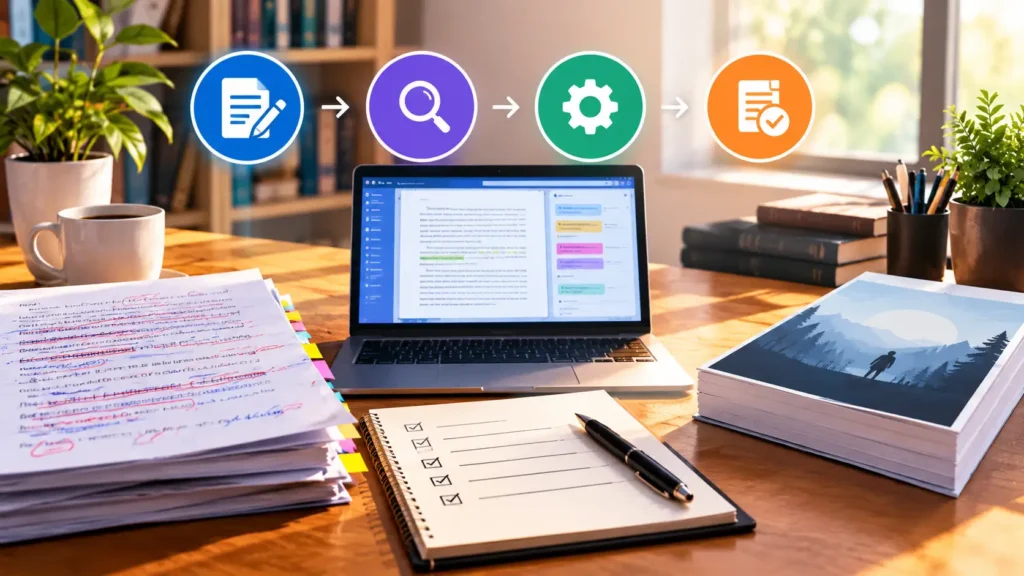
Try this four step path on your next book. First, let the finished draft rest for two weeks, because distance sharpens your judgment. Second, run a whole book analysis and write down the three largest problems.
Third, fix those problems scene by scene, using a structural coach if you want guidance. Fourth, polish sentences with a line inspector and send the result to human readers. This sequence respects how stories actually break: big problems come first, small ones last.
Final Thoughts
Deciding among ai book analysis tools for authors marlowe fictionary autocrit depends on the task you need handled. Marlowe measures your book against bestsellers, Fictionary teaches structure scene by scene and AutoCrit refines your prose against genre norms.
Select one, run it on your next draft and act on the biggest finding. A clearer, tighter manuscript sits closer than you think.
FAQs
Is there a free book analysis AI for authors?
Yes, Marlowe has a free basic plan, allowing you to test your manuscript at no cost. Fictionary and AutoCrit offer free trials instead of free plans. A free report provides basic analysis of your manuscript. Marlowe’s paid plans have more in depth reports and integration of revision tracking.
What do Authors AI Marlowe reviews say?
Writers say Marlowe is fast and comparatively affordable. Marlowe sets genre benchmarks. However, critics say Marlowe doesn’t tell clients how to solve the problems it identifies. Some say comparisons of Marlowe reports to bestsellers feel off. Marlowe works best for fiction. Most reviewers consider Marlowe a first pass check and hire a human editor for polish after using Marlowe.
What is Marlowe by Authors AI?
From Authors AI, the creators of Marlowe, is a manuscript analysis platform where you upload your MS in a Word or EPUB document to get a report on your plot structure and pacing, your characters and dialogue. They say they will never generate or edit your text.
How does book analysis AI differ from writing tools?
Analysis tools read your completed draft and show issues. Writing tools create new text for you. Using analysis tools keeps your text, your draft and avoids disclosure issues on publishing platforms. Go for analysis tools if you are looking for critical and honest feedback about your work. If you’re looking to have someone else do your work for you, go with a writing tool.